

What is ADAS? A deep dive into the "brain" in your car, revealing the secrets of 6 levels of future driving (Level 0 – Level 5).
This article is intended to describe the details and features of the product. However, actual performance may vary depending on the environment, external factors, and the individual user's usage characteristics.
What is ADAS? A Deep Dive into Your Car's "Brain" and Unlocking the Secrets of 6 Levels of Future Driving (Level 0 – Level 5)
In an era where the automotive industry is increasingly moving towards "smart cars," the most frequently discussed system is ADAS – Advanced Driver Assistance Systems. This crucial technology significantly enhances the safety and convenience of new car models, whether through features like automatic braking, lane keeping assist, or front collision warning radars.
This article will delve into what ADAS is, how it works, and the differences between its capabilities from Level 0 to Level 5. It will also provide examples of popular functions commonly found in modern vehicles.
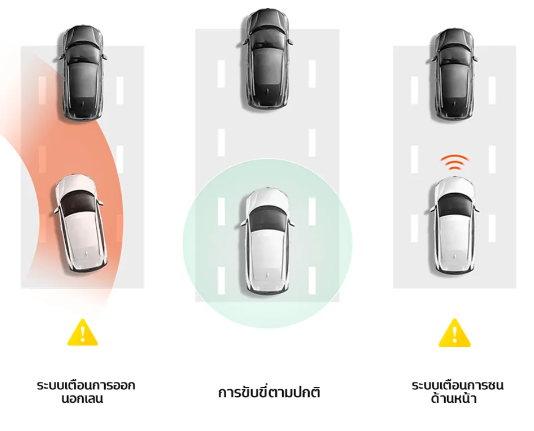
What is ADAS? Definition and functions of advanced driver-assistance systems
ADAS (Advanced Driver Assistance Systems) are electronic systems that support drivers in operating vehicles more safely and precisely. They utilize various sensors such as cameras, radar (RADAR), LiDAR, ultrasonic sensors, and advanced processing systems.
The main functions of ADAS include:
- Reducing accident risk through warning functions and partial vehicle control assistance.
- Enhancing driving convenience, such as automatically maintaining speed relative to the vehicle ahead.
- Improving decision-making by using sensor data to help assess situations.
- Serving as the foundation for future autonomous vehicles, as all autonomous systems must begin with ADAS.
Simply put, ADAS does not replace the driver but acts as an "intelligent assistant" that tangibly makes driving safer.
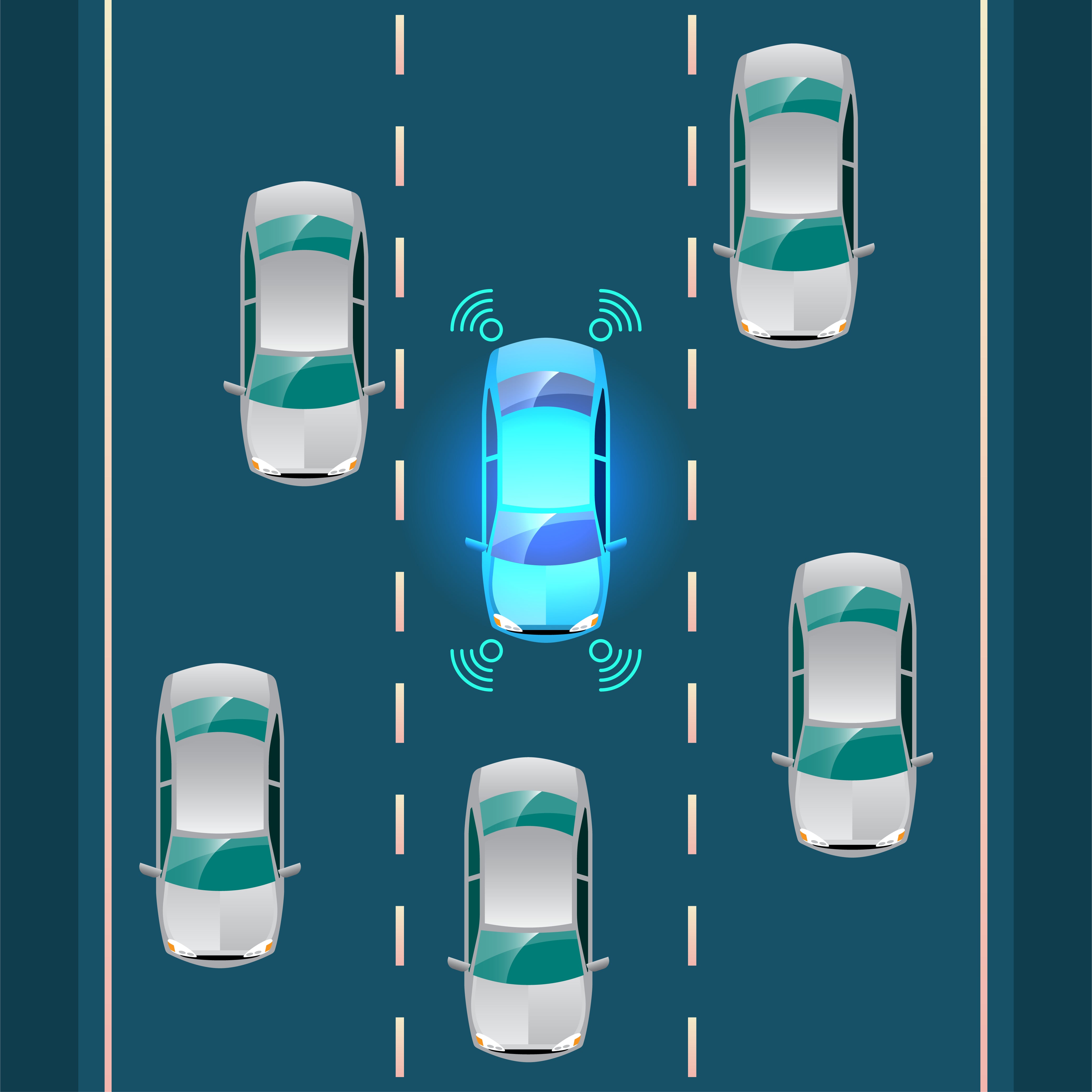
How do ADAS systems work?
ADAS consists of multiple components that work together in real-time, from detection and analysis to partial vehicle control commands.
1. Sensors
Their function is to collect data around the vehicle, such as distance, speed, obstacles, and road lines.
-
Cameras: Capture lanes, traffic signs, and vehicles.
-
RADAR: Detects the speed and distance of the vehicle ahead, accurate in rain or fog.
-
LiDAR: Detects objects in 3D.
- Ultrasonic: Used in parking systems and for detecting nearby objects.
2. Electronic Control Unit (ECU) – The "Brain"
The electronic control unit that calculates and interprets data from all sensors to assess "real-time road situations" (e.g., collision risk distance, lane departure, speed of the car ahead, etc.).
3. Decision and Control System
Once the ECU has analyzed the situation, the system decides whether to warn or take control of the vehicle for the driver, such as:
- Applying brakes
- Adjusting the steering wheel
- Adjusting speed to match the car ahead
Note: All of this happens in a fraction of a second to give the driver more time to react.
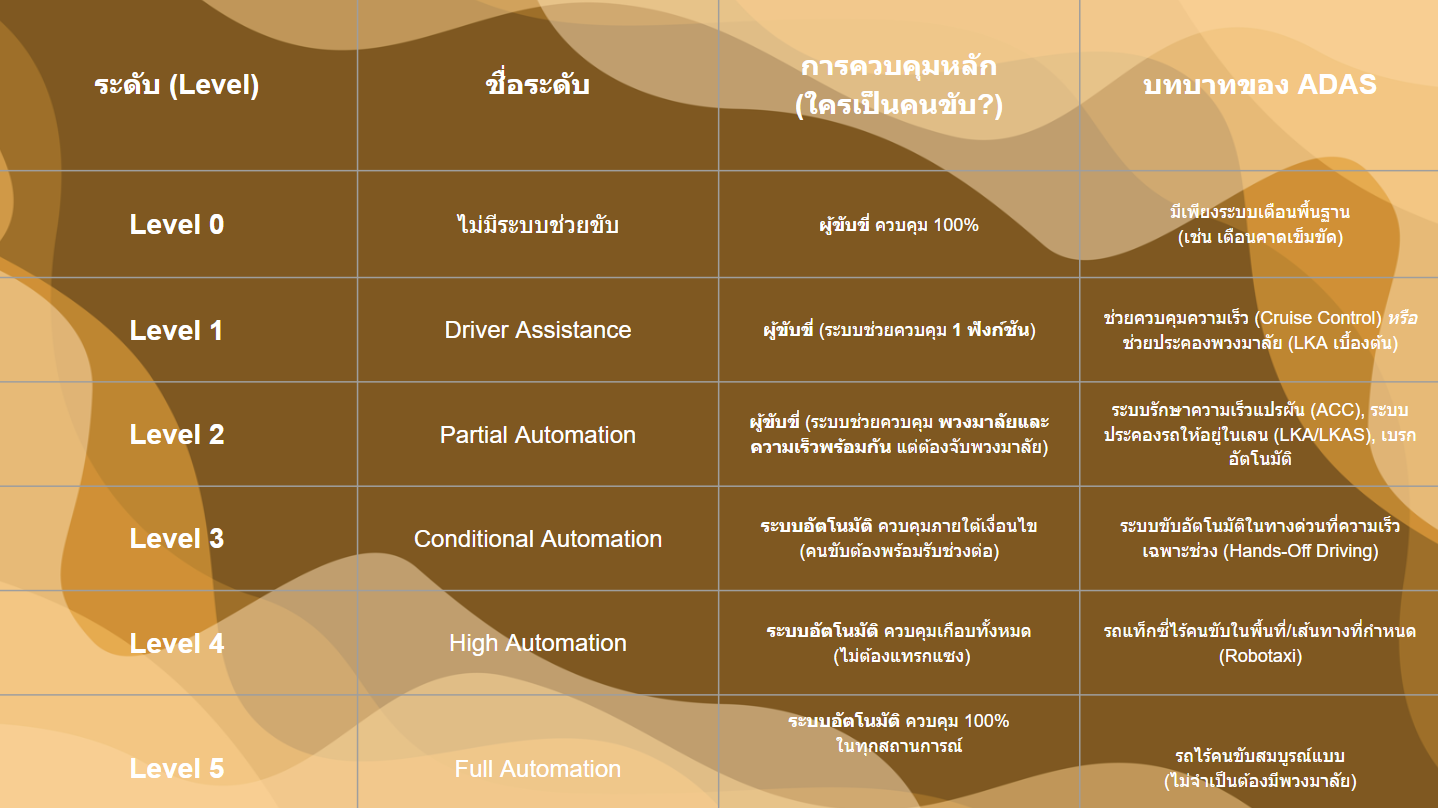
ADAS Autonomous Driving Levels from Level 0–Level 5
SAE International has categorized the capabilities of driver assistance systems into 6 levels, ranging from no driver assistance at all to fully autonomous vehicles.
🚘 Level 0 – No Driving Automation
The driver controls 100%, but the car may have basic features such as:
- Seatbelt reminder
- Speed warning light
No control of the vehicle by the system.
🚘 Level 1 – Driver Assistance
The system assists with "either one" control, such as braking or steering, but not simultaneously.
Examples:
- Cruise Control
- Basic Lane Keep Assist
🚘 Level 2 – Partial Automation
The car can control "both steering and speed" simultaneously, but the driver must supervise constantly.
For example:
- Adaptive Cruise Control (ACC)
- Lane Keeping Assist System (LKA/LKAS)
- Automatic Emergency Braking
This is the most common level found in current new car models.
🚘 Level 3 – Conditional Automation
The car can "drive itself in certain situations" but requires a human to take over when the system requests assistance.
Examples:
- Automatic driving system on highways within specific speed ranges
The user does not need to hold the steering wheel in certain situations.
🚘 Level 4 – High Automation
The car can drive itself almost entirely without driver intervention, except in certain road conditions, such as heavy snowfall.
Often found in experimental robotaxis abroad.
🚘 Level 5 – Full Automation
100% driverless car, with no steering wheel or pedals. All occupants are simply "passengers."
This level is the ultimate goal for future vehicles.

Examples of ADAS features most commonly seen by car users today
These features are actual working systems in most cars with Level 1–2 ADAS.
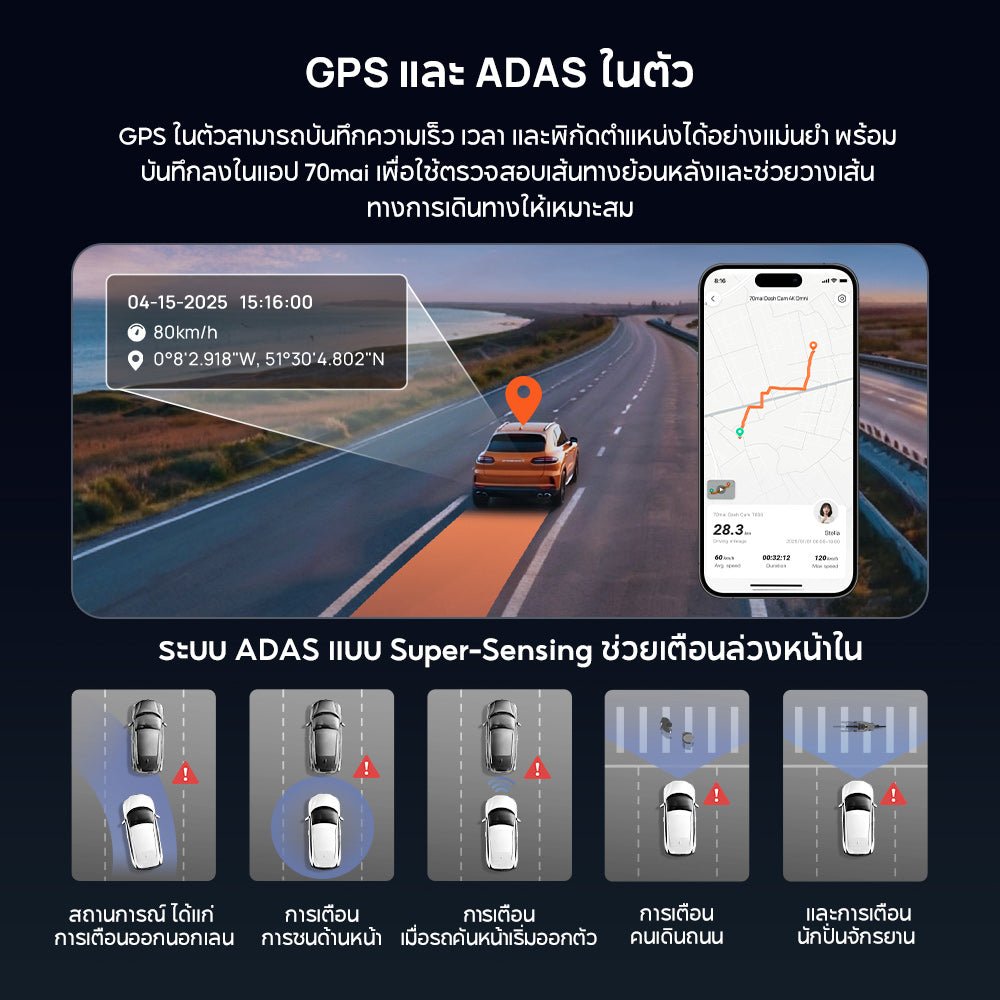
1. AEB – Automatic Emergency Braking
Automatic Emergency Braking System: When the car detects an imminent collision, the system will:
- Warn
- Increase braking force
- Apply full braking if the driver does not respond
Significantly helps reduce rear-end collisions.
2. ACC – Adaptive Cruise Control
Automatically maintains speed and adjusts it in real-time according to the vehicle ahead.
- Reduces speed when the vehicle ahead brakes.
- Accelerates back when the road is clear.
Helps reduce fatigue during long-distance driving.
3. Lane Keeping Assist (LKA)
Maintains the vehicle's position within the lane.
- Detects road markings via camera.
- Applies steering force to keep the vehicle centered in the lane.
Differs from "Lane Departure Warning (LDW)" which only warns, as LKA can actively control the steering wheel.
4. Blind Spot Monitoring (BSM)
Warns when there's a vehicle in your blind spot, making lane changes much safer.
5. Rear Cross Traffic Alert (RCTA)Warns of vehicles approaching from behind while backing out of a parking space. Very useful in tight parking lots.
6. Traffic Sign Recognition
Reads speed limit signs, stop signs, or warning signs and displays them to the driver.
7. Driver Monitoring
Detects drowsiness or inattention, warning the driver to rest or pay more attention to driving.
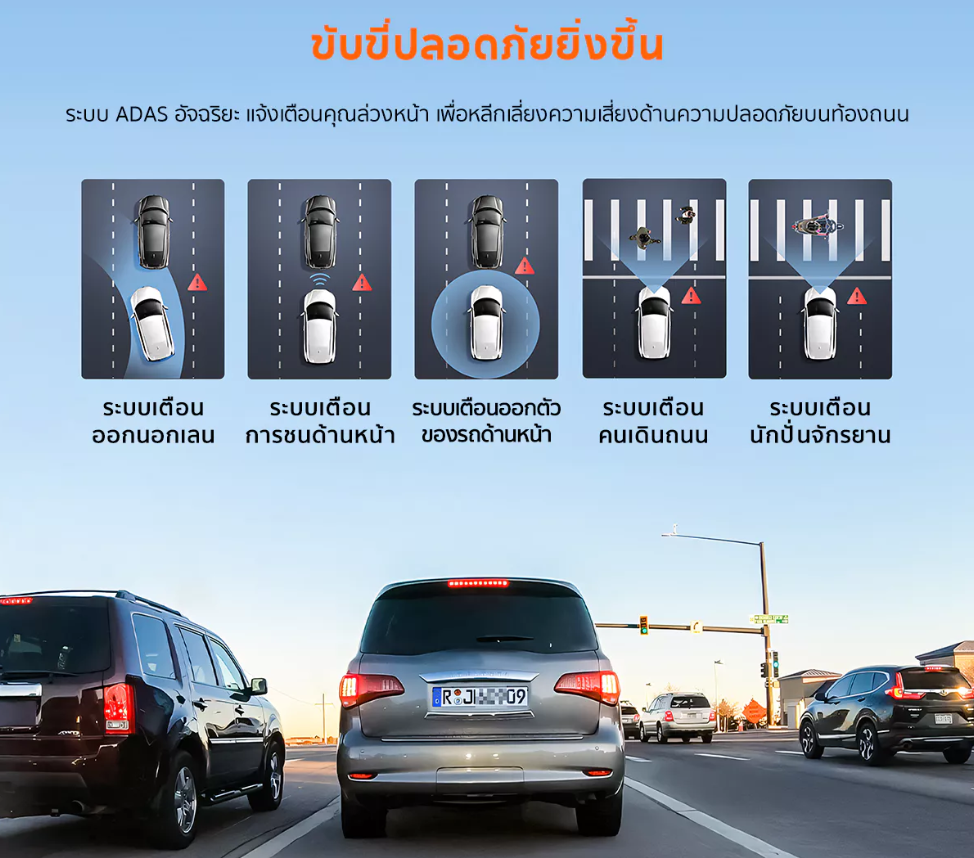
Summary: ADAS is not just an extra feature, but the heart of modern vehicle safety.
From basic warning systems to partial driver assistance, ADAS has clearly become a technology that makes driving safer and is the beginning of the era of self-driving vehicles in the future.
Understanding Levels of Automation Level 0–Level 5 helps users know what their car can do and how to use the system without mistakenly thinking the car "drives itself completely."
Ultimately, ADAS doesn't replace the driver, but rather enhances safety and confidence on the road, which is why almost all new car models today come with this system as standard.
Note: The images and details shown are for advertising and service introduction purposes only. Actual results may vary depending on environmental conditions, specific factors of each car model, installation, and individual usage characteristics.


