

Thailand's climate has high temperatures all year round, strong sunlight, and intense UV radiation, making car window film an essential car accessory. Whether it's a gasoline-powered car or an electric car, choosing the right car film not only helps keep the cabin cooler but also protects the driver, reduces the burden on the air conditioning system, and preserves the car's interior for longer use.
This article will help you understand the principles of choosing the right window film before deciding to install it on your car.

Table of Contents
Why should cars have window film installed?
Thailand's Hot Weather and UV Radiation Protection
Thailand has hot weather almost all year round. A car parked in the sun for just a few hours can have a very high internal temperature. Car window film with UV protection properties can effectively reduce the effects of sunlight on skin, eyes, and interior materials.
UV protection also helps reduce fading of leather seats, dashboards, and plastic parts inside the car, keeping the car looking new for longer.
Reduced Energy Loss and Air Conditioning System Burden
When a lot of heat enters the cabin, the air conditioning system has to work harder to maintain a comfortable temperature, resulting in increased energy consumption.
- Gasoline-powered cars: The engine has to use more energy to drive the air conditioner compressor, leading to higher fuel consumption.
- Electric Vehicles (EVs): The air conditioning system uses power directly from the battery. Reducing the heat inside the car helps reduce electricity consumption and helps maintain driving range to a certain extent.
Window film with effective heat rejection thus helps reduce the burden on the air conditioning system in both gasoline and electric cars.
Safety and Privacy
Car film enhances privacy from external views, reduces the chance of seeing valuables inside the car, and helps passengers feel more comfortable.
In addition, quality film helps reduce glare from oncoming headlights at night, reduces eye strain while driving, and helps improve visibility of road conditions.
How to choose the right window film for your needs
When choosing film, you should not only look at the color intensity, but also consider the technical values related to the actual performance of the film.
Heat Rejection: What are IRR and TSER?
When choosing car window film, many people often see the numbers IRR and TSER, which indicate heat rejection efficiency. However, these two values have different meanings.
IRR (Infrared Rejection) is the rate at which infrared radiation is blocked, which helps reduce the feeling of heat from sunlight. However, IRR values do not have a uniform testing standard, so numbers from different brands may not be directly comparable.
TSER (Total Solar Energy Rejected) is the total solar energy rejection value, covering visible light, infrared radiation, and UV radiation. It more accurately reflects the overall heat rejection efficiency and is the value that should be used when comparing different car window film models.
UV Protection
Good window film should be able to block a high level of UV radiation to help reduce skin risks and slow down the degradation of car interior materials.
VLT (Visible Light Transmission)
VLT (Visible Light Transmission) is the rate of visible light passing through. In Thailand, many people are familiar with terms like "40% film," "60% film," and "80% film," which refer to VLT values.
Generally, low VLT values provide more privacy and better sun reduction, while high VLT values offer brighter and clearer visibility. Mid-range VLT values provide a balanced option between visibility, comfort, and privacy.
HAZE (Film Haze)
HAZE is the level of blurriness or light scattering through the film. If the HAZE value is high, images viewed through the glass may appear fuzzy, unclear, and cause light scattering around headlights or streetlights at night.
High-quality film should have a low HAZE value to ensure clear visibility both day and night.
How do different types of window film differ?
Dyed Film
Dyed film is an economical option that helps reduce glare and enhance privacy to a certain extent, but its heat rejection performance is quite limited. It is suitable for those who want to install film on a budget.
Metalized Film
Metalized film offers better heat rejection than dyed film and is more durable. However, this type of film may interfere with some electronic device signals, such as GPS or mobile phones, in some cases.
Sputtered Metal Film
Sputtered metal film offers higher heat rejection performance than regular metalized film and helps minimize interference with electronic signals. This makes it an ideal choice for those who want both efficiency and value.
Nano Ceramic Film
Nano ceramic film is currently popular because it offers excellent heat rejection, does not interfere with electronic signals, and provides clear visibility. It is therefore suitable for new cars and electric vehicles (EVs).
Now that you understand the principles of choosing window film based on technical criteria such as IRR, TSER, VLT, and HAZE, as well as the pros and cons of each type of film, the next question is, "Which brand should I choose?"
Currently, there are many brands of car window film available in the market, but not many can meet all the aforementioned criteria, including high heat rejection efficiency, no interference with electronic signals, clear visibility, and a sufficiently long warranty for peace of mind.
70mai Film is one of the options that meets all these needs. Let's see what makes 70mai window film stand out.
Why choose 70mai window film?
Reliable Quality with Options for Every Need
70mai Film uses nano-ceramic technology that effectively reduces heat from sunlight, making the cabin cooler without interfering with electronic signals such as GPS, Wi-Fi, and other signals. It also blocks up to 99% of UV radiation to protect both passengers and interior materials from sun damage.
70mai Film is available in 3 series to meet different usage needs and budgets:
- Essential Series is suitable for first-time film installers, offering IRR 85%+ with cost-effective heat rejection performance at an affordable price.
- Pro Series features a low HAZE value of just 0.47% and an interior light reflection value of less than 10%, providing clear visibility, reduced glare, and a balance between performance and value.
- Ultra Series offers maximum performance with a TSER of over 50% and a high IRR of 98%, ideal for those who demand premium heat rejection.

For more information about 70maifilm, please visit the product information page or contact us via LINE for additional advice.
Professional Installation Service with Confident Warranty
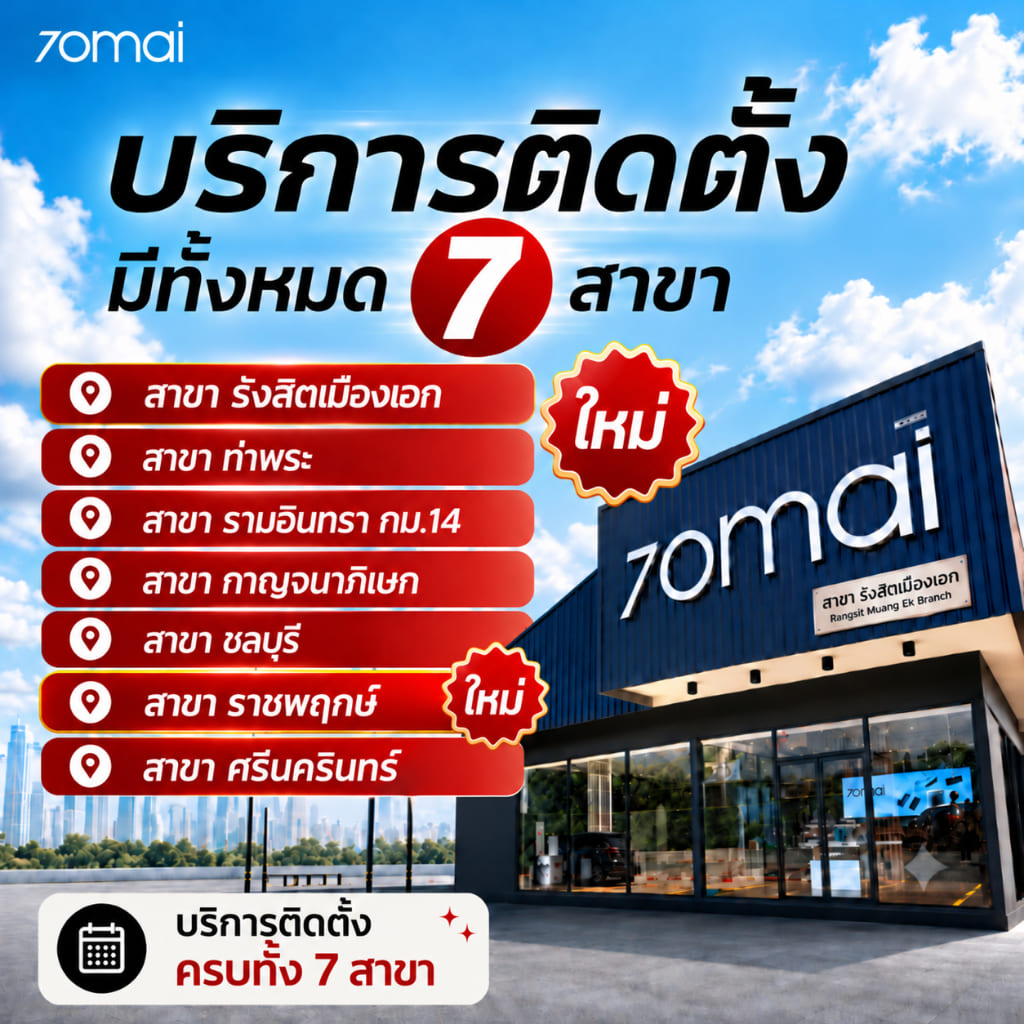
70mai Film has car window tinting shops and installation centers in many areas across Thailand. All branches have standard installation rooms, complete tools, and skilled technicians who have undergone professional training. In addition, every film set comes with an 8-year warranty to ensure confidence in product quality, installation, and after-sales service.
Where to install 70mai car window film in Thailand?
You can have 70mai window film installed at authorized installation shops in Thailand, with professional technicians and standard installation areas.


